
The Meal Prep Shift: From 4-Hour Sundays to Weeknight Freedom
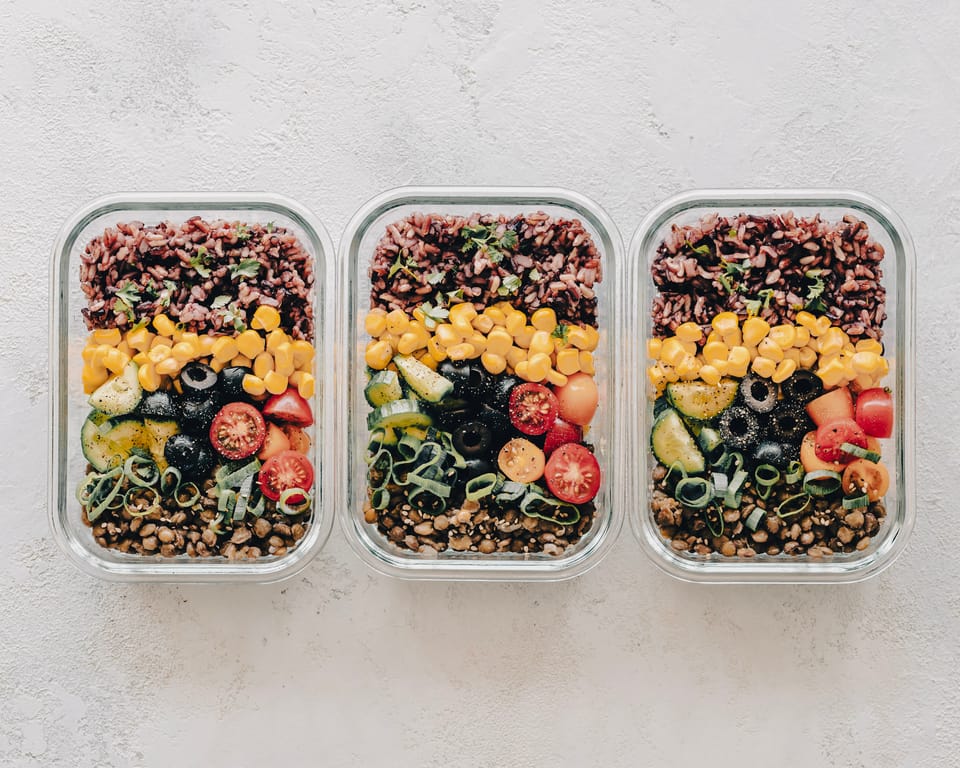
Striving to Thrive
Parenting with food allergies — one day at a time, with systems that make it possible.
For a long time, Sunday meal prep was not a hobby. It was how we survived the week. Four hours in the kitchen so dinner wouldn’t become a nightly emergency.
In a household where both parents work full time, dinner has always been the pressure point. And for us, ordering out was not a fallback. With multiple food allergies, “we’ll just grab something” was rarely an option. Dinner needed to be safe, predictable, and fast to serve, even when we were tired.
The old system: one big Sunday to protect the week
For years, my approach was simple. If I did the hard work on Sunday, I could prevent chaos from showing up every night at 5 p.m.
Sunday prep usually meant:
- A couple meals fully cooked and ready to reheat for the first nights of the week
- Ingredients prepped for easy cooking later (so dinner was “assemble and cook,” not “start from scratch”)
- Extra food on standby, because kids are kids, and sometimes after-school hunger quietly eats into the dinner plan
It worked. It also took a toll.
What made it heavy
The hardest part wasn’t the cooking. It was the mental load of having to be right, every week.
If I was tired, behind, or just didn’t have it in me, the whole plan degraded. Nutrition got uneven. Variety shrank. The week started to feel like a series of small compromises. And with multiple food allergies, our safe convenience options are limited. We can’t just lean on microwavable meals or grab something last-minute without doing a full ingredient check and risk assessment.
Dinner wasn’t just dinner. It was a system that had to hold.
A quick note, because people ask
A quick note, because I know some people will wonder about this: my husband absolutely helps. We split responsibilities in a way that works for our household. He takes on breakfast and lunch prep, and I have historically taken the lead on dinner systems. That division has shifted and evolved over time, but we are in this together.
The turning point: dinner that waits safely until it’s time to cook
In December, we made a change that felt like relief.
The turning point for us was Suvie, a countertop oven built for scheduled cooking. We load dinner in the morning, it stays refrigerated through the day, and it cooks at 5 p.m. It can also cook two components at different temperatures and modes (for example, air fry, bake, or roast), which makes a balanced meal feel much more doable on a weeknight.
Our new default looks like this:
- We load dinner in the morning
- It stays cold through the day
- At 5 p.m., dinner is ready, without the scramble
Quick note: I’m not sponsored by or affiliated with Suvie. It’s just been a genuinely helpful find for our family. I can’t speak to long-term durability yet, but for this season, it’s working for us.
That one shift changed everything for me. It turned dinner from a nightly deadline into a background system.
Why this works better for our season of life
The win is not only time. It’s also the kind of food we can make.
Before, we optimized for meals that were easy to reheat quickly, because evenings were tight. We avoided anything that would take real time at 5 p.m., because dinner needed to be fast and predictable when the day was already spent.
With Suvie, we can cook meals that take longer and still have dinner show up reliably at dinner time. That has helped us make more intentionally balanced, nutritious meals. More vegetables. More variety. Less “we’re just trying to get through tonight.”
It also means the failure mode is softer. If I didn’t do a perfect Sunday, we didn’t lose the whole week.
What it looks like now (our weeknight rhythm)
We still plan dinners for the week. That part hasn’t changed. What changed is when the effort happens, and how concentrated it feels.
Here’s what our rhythm looks like now:
- We keep a simple plan for the week (enough to reduce decision fatigue)
- In the morning, either my husband or I loads dinner for that evening
- Dinner stays refrigerated until it’s time to cook
- At 5 p.m., we’re not improvising. We’re just eating
It’s not effortless. But it is dramatically lighter.
A few Suvie dinners we repeat
One of the biggest unlocks for us is that Suvie can cook two different components at different temperatures at the same time. That makes it easier to build a balanced plate without juggling a stove.
We also lean on a simple shortcut: frozen brown rice (we microwave it) to make “real dinner” feel doable on a weeknight.
Here are a few dinners we repeat:
1) Chicken teriyaki + vegetables
This is our most reliable weeknight default.
- Frozen chicken breast (straight into the roast pan — no defrosting)
- Frozen vegetables (broccoli, carrots, cauliflower)
- Teriyaki sauce (finish or serve on the side)
- Microwaved frozen brown rice
2) Air-fried falafel bowls
Air frying has been one of the most useful Suvie features for us because it makes crispy food possible without extra effort.
- Air-fried frozen falafel
- Frozen vegetables (Costco’s Primavera Mistura is our go-to)
- Microwaved frozen brown rice
- A bed of mixed greens
- Tahini sauce on top
3) Roasted tofu + vegetable bowls
This is a good “plant-based night” that still feels satisfying.
- Roasted tofu
- Frozen vegetables
- Microwaved frozen brown rice
- A bed of mixed greens
- Sriracha (or your safe sauce of choice)
4) Salmon + broccoli
This is where Suvie’s different temps and timing really help.
- Roasted salmon (from frozen)
- Broccoli (from frozen)
- Microwaved frozen brown rice, or quinoa when we have time (depending on the day)
The unexpected bonus: better mornings, too
Something I didn’t expect is that once dinner stopped dominating Sunday, our energy shifted.
We’ve started exploring more nutritious breakfasts as well, including tofu scrambles with vegetables. When the baseline system feels stable, you suddenly have margin to make choices that feel like thriving, not just surviving.
If you’re in the “Sunday survival era,” start here
If you’re in a season where meal prep takes up half your weekend, I just want to say: you’re not doing it wrong. You’re building stability in a world that doesn’t make food allergies easy.
Suvie is just one way we’ve found to make dinner predictable. The bigger idea is building a system that lowers the 5 p.m. scramble. There are lots of ways to do that.
Save this: the principles that made dinner feel lighter for us
- We still plan the week, but we don’t try to solve the whole week on Sunday
- We aim for fewer decisions at 5 p.m., not more variety at 5 p.m.
- We build dinners that can wait safely until cooking time
- We prioritize meals that feel balanced, not just meals that reheat the fastest
- When the plan breaks, we reset. We don’t spiral
I’m not a medical professional. This post reflects personal experience and is shared for informational purposes only. Please consult your allergist or healthcare team for guidance specific to your situation.