
Travel, Reimagined: Safe Food on the Road With Severe Food Allergies
Striving to Thrive
Parenting with food allergies — one day at a time, with systems that make it possible.
We never leave the house without snacks. If you’re parenting a kid with severe food allergies, that part becomes automatic, like keys and shoes. But preparedness is not just food. For us, it includes medication, a bag that stays within reach, staying aware of risk, and an awareness of how far we are from urgent care or a hospital.
Even when you are prepared, the harder part of traveling is everything after the snacks. For our family, restaurants usually aren’t part of the plan, at least right now. With multiple food allergies, the uncertainty and cross-contact risk can stack up fast, and that tradeoff does not feel worth it for us when we’re away from home. So we plan ahead. We keep food cold, heat it safely, and try to do it in a way that does not make our child feel like the entire day revolves around restrictions.
When travel was possible, but didn’t feel like vacation
For a long time, travel was possible, but it took a monumental amount of effort. It was worth it for the family memories, but it also took the “vacation” out of vacation. Planning, packing, and feeding everyone safely felt like an extra job, and both my husband and I were already working full time.
The most we would do was a short weekend trip after hours of prepping food we could eat without cooking, reheat quickly, or cook with minimal effort. Overnight stays often depended on renting places with kitchens, which was an extra cost, because eating out didn’t feel like an option we could count on. The word “vacation” rarely came to mind, because it felt like all work.
The slow build: small hacks that added up
Then, slowly, with each trip, my husband and I found simple hacks that made things more doable. I figured out which meals reheated well and built a few reliable go-to meals. I also discovered a couple of treat meals I could throw together in a pinch when we had access to a grocery store but no real cooking setup. Over time, we built a small rotation we could trust.
The missing piece: reliable cold food in the car
Then we found a shift that made me feel genuinely empowered.
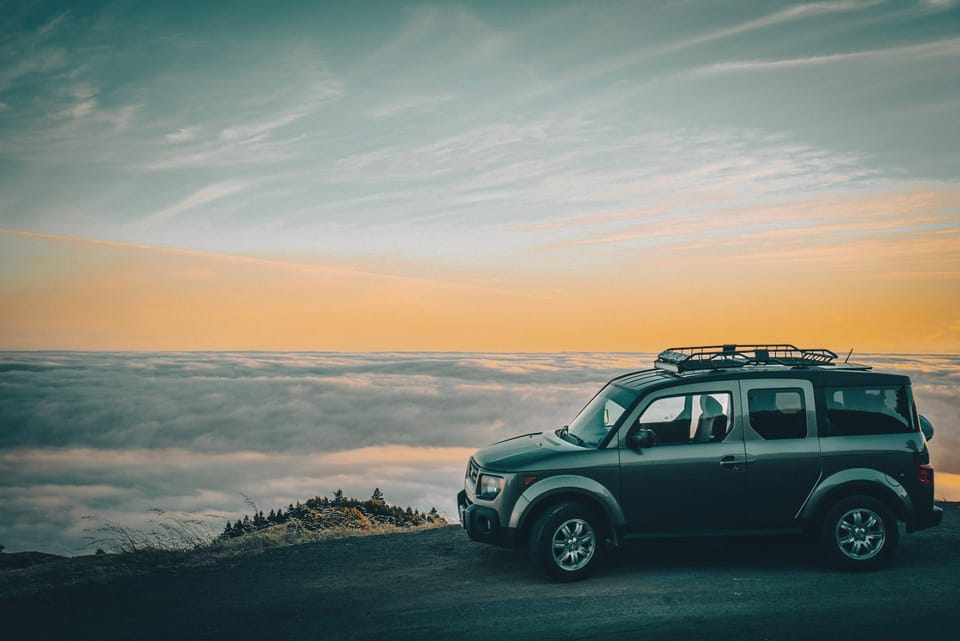
While researching overlanding (people who camp off-grid for days at a time), we learned about a setup that made reliable cold food possible on the road: a small car refrigerator, about the size of a cooler, powered by a portable battery.
The routine is simple but powerful. We charge the battery while driving, keep the fridge plugged into the battery, and the cold chain continues even when the car is off. That continuity is the whole point.
It is still work, but having a refrigerator in the car changed everything for us. It makes travel easier, and it even makes short hotel stays feel more doable. For the first time in a long time, “vacation” started to feel like a word that could apply to us.
Why this matters for our family
To add context, my son has severe food allergies to milk (including all dairy), eggs, flaxseed, cashews, pistachios, and hazelnuts. Dairy and eggs show up in so much everyday cooking. Cashews and flaxseed are also common in vegan foods as substitutes. Flaxseed is especially tricky because it is not a major allergen, so it doesn’t always get the same level of attention in labeling and handling. My husband also has a severe peanut allergy, which adds another layer.
For our family, dining out often feels high risk. When you’re traveling farther from home, in unfamiliar environments, and more aware of how far you are from medical care, it can be hard to justify the gamble. For a long time, we avoided vacation trips unless I had a full day to do major food prep. Even visiting grandparents, a three-hour drive, felt intimidating because their kitchen and refrigerator were stocked with many of our allergens. It was limiting and stressful, and for a long time we stayed close to home.
We’ve learned that one shared, allergy-friendly food system works best for our family. It reduces cross-contact risk and the chance of mix-ups. It also helps our son feel less singled out. Travel is just where that approach becomes especially important.
A real freedom moment: dinner in the car, not in a restaurant
One of the first times the “car kitchen” truly clicked for me was an overnight trip to the city. We were going for a big show, and finding a place with a kitchen felt much harder than usual.
So we brought the meal with us.
We drove about 2.5 hours with dinner safely stored in the fridge. When it was time to eat, we used a travel slow heater to warm it up, plugged into the battery. The fridge also meant we had safe food ready for breakfast and lunch the next day, without needing to unload everything into an unfamiliar mini-fridge.
It wasn’t effortless. But it was freeing.
Our travel food system (the version that works for us)
This is not a perfect system. It is a repeatable one. And that is what makes it valuable for us. If you’re new to this, take what helps and leave the rest. Sometimes one small change makes the next trip feel a lot more doable.
All the time (baseline)
This is what we treat as our baseline whenever we leave home:
- Several options of allergy-safe snacks
- Medications within reach (not packed away)
- Water bottles for each person, plus backup water in the car
- A habit of staying aware of how far we are from urgent care/hospital
Day trips (a few hours out)
For day trips, we keep it simple:
- An on-the-go cooler bag with an ice pack
- Familiar foods that travel well (for us, this usually means sandwiches)
- A plan that helps the day stay focused on play, not food logistics
Weekend trips (1–2 nights)
We almost always book a place with a microwave or a kitchen. Soon, we’ll have even more flexibility with a mini microwave in the car.
For weekends, what helps most is planning the full arc: breakfast, lunch, and dinner, not just snacks. These work for our family’s allergies, but every family’s safe list will be different.
Breakfast ideas that travel well for us:
- Granola with oat or soy milk and dried fruit
- A pre-prepped scramble kit ready to cook (sausage, potatoes, bell peppers, spinach)
- Tofu scramble pre-cooked at home for easy reheating
Lunch (easy + repeatable):
- Sandwiches + fruit and veggies
- A “travel treat” from the grocery store that works for our family’s allergies: allergy-friendly bread with prosciutto and arugula
Dinner (the key for us): one-pot meals
One-pot meals are the key for me when traveling. Less equipment, less cleanup, and fewer places for cross-contact to creep in.
A few that work well for us:
- Pasta bolognese (I usually make the sauce at home, then cook the pasta and put it together on the trip)
- A Southwestern one-pot: sausage, bell pepper, instant rice, broth, seasoning, and a lot of spinach
- Chicken broth soup with allergy-friendly ramen noodles and spinach, seasoned simply
Longer drive trips (several days)
For longer trips, the fridge becomes a true game changer for us. It lets us prep and store more meals ahead of time, which reduces how often we need to figure out food on the road. We add grocery store stops when needed and rely on a detailed plan for meals and staples.
The big shift is confidence. We now feel able to travel anywhere we can drive. It still takes planning, but it feels possible.
Car setup: the cold chain + heat option
Here’s what we use:
- Small car refrigerator (we use an Iceco)
- Portable battery charged while driving
- Fridge plugged into battery so the cold chain continues when the car is off
- Travel slow heater for meals on the go
- (Soon) a mini microwave for even more flexibility
The advantage of the fridge is not having to depend on ice packs and also having more confidence that the food is stored at a steady temperature. It doesn’t hurt for drinks either.
The kitchen tub (our “safe container” for cooking)
We often travel with a dedicated kitchen tub so we can use our own equipment and reduce cross-contact risk.
Our tub includes:
- Cutting board + knife
- Big metal serving spoon
- Heat-safe cups (for soup, pasta, oatmeal with oat milk)
- Disposable cups and utensils
- Instant Pot (or a sauté pan + big pot if we’re in a full kitchen)
- Colander
- Spices
- Ladle (if we’re doing soup)
- Paper towels
- Kitchen towels (pack between pans, use during cooking, and as a placemat)
- Disinfectant wipes
- Hand wipes for the car
- Clean sponge + dishwasher detergent
When we arrive somewhere new, one of our first steps is running any dishes, utensils, and pots we’ll use through the dishwasher, then wiping down the kitchen. It’s not foolproof, but it helps us start from a cleaner baseline.
Save this: the principles that make travel feel possible for us
- We aim for repeatable meals, not perfect meals
- We keep cold food reliably cold, not “hopefully cold”
- We bring one dependable way to heat food safely
- We reduce variables where we can (fewer moving parts = fewer mistakes)
- We follow our child’s allergy plan and adapt everything to the trip, the setting, and the day
It is still work. But it is work that buys freedom. One day at a time.
I’m not a medical professional. This post reflects personal experience and is shared for informational purposes only. Please consult your allergist or healthcare team for guidance specific to your situation.